
Views: 0 Author: Site Editor Publish Time: 2026-06-10 Origin: Site


TL;DR: Selecting the right material for your fastening hardware is the most critical step in product design. This comprehensive guide explores the engineering, material science, and practical applications of fastening solutions. We dive deep into the properties of POM, Nylon, and Polypropylene, explaining how environmental factors like UV radiation, extreme temperatures, and moisture affect performance. By understanding these variables, product designers can ensure maximum durability, safety, and user satisfaction. Read on to discover testing standards, industry applications, and how to select the best manufacturing partner for your needs.
When designing outdoor gear, tactical equipment, pet accessories, or everyday luggage, the reliability of your hardware components is paramount. A single point of failure in a fastening mechanism can render an entire product unusable, leading to customer dissatisfaction and potential safety hazards. The foundation of a reliable fastening system lies in its material composition. Understanding the molecular structure, tensile strength, and environmental resistance of different polymers is essential for engineers and product managers who want to create products that stand the test of time.
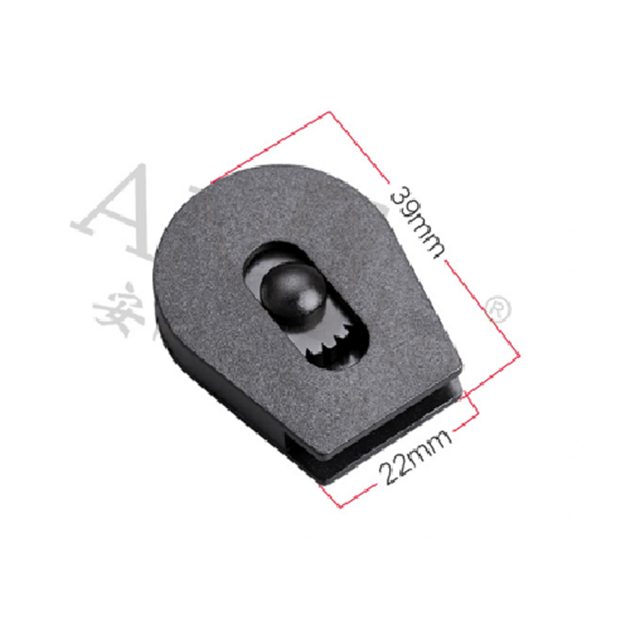
To fully appreciate the engineering behind fastening hardware, we must first answer a fundamental question: what exactly constitutes a Plastic Spring Buckle? At its core, this component is a mechanical fastening device designed to join two loose ends of webbing or strapping securely while allowing for quick and intentional release. Unlike traditional metal buckles that rely on pins and holes, this modern hardware utilizes a side-release mechanism powered by the inherent flexural properties of the polymer itself.
The "spring" aspect does not refer to a coiled metal wire hidden inside the mechanism. Instead, it refers to the cantilevered arms (the male part of the buckle) that flex inward when pressure is applied to the sides and snap back into their original position once they clear the retaining edges of the female housing. This elastic deformation and subsequent recovery are entirely dependent on the flexural modulus and fatigue resistance of the chosen plastic material. If the material is too brittle, the arms will snap under pressure; if it is too soft, the arms will deform permanently and fail to hold a load.
Therefore, a high-quality Plastic Spring Buckle is a marvel of injection molding precision and polymer science. It must maintain its structural integrity through thousands of cyclic actuations (opening and closing), resist creep (the tendency of a solid material to move slowly or deform permanently under the influence of mechanical stresses), and withstand sudden shock loads without catastrophic failure.
The performance, longevity, and safety of a Plastic Spring Buckle are inextricably linked to the raw materials used during the injection molding process. You cannot engineer a heavy-duty tactical backpack using the same low-grade plastics found in disposable packaging. The material dictates the buckle's tensile strength, its weight, its aesthetic finish, and its ability to survive harsh environmental conditions.
When a load is applied to the webbing, the stress is transferred directly to the crossbars and the locking mechanisms of the buckle. The material must possess high tensile strength to prevent the crossbars from bending or breaking. Furthermore, because these buckles are often used in dynamic environments—such as a bouncing backpack or a pulling dog—the material must have excellent impact resistance to absorb sudden jerks without shattering.
Beyond mechanical strength, the material choice affects the user experience. A well-chosen polymer will provide a satisfying, audible "click" when engaged, giving the user tactile and auditory confirmation that the connection is secure. It will also offer a smooth surface finish that reduces friction on the webbing, preventing premature wear and tear on the fabric straps.
A Plastic Spring Buckle rarely exists in a controlled, indoor environment. It is subjected to a barrage of environmental stressors that can degrade polymers over time. Understanding these challenges is the first step in selecting the right material.
Ultraviolet (UV) Radiation: Prolonged exposure to sunlight can cause photo-oxidation in many plastics. This chemical process breaks down the polymer chains, leading to discoloration (yellowing or fading), surface chalking, and a severe loss of mechanical strength. A buckle that becomes brittle from UV exposure is a ticking time bomb.
Extreme Temperatures: Temperature fluctuations drastically alter the physical properties of plastics. In freezing conditions, many polymers lose their flexibility and become highly susceptible to impact shattering. Conversely, in high-heat environments (like the interior of a car parked in the sun), plastics can soften, reducing their load-bearing capacity and causing them to warp under tension.
Moisture and Humidity: Some polymers are hygroscopic, meaning they absorb moisture from the air or when submerged. While this can sometimes increase flexibility, it often leads to dimensional swelling and a reduction in tensile strength. For marine or aquatic applications, choosing a hydrophobic material is critical.
Chemical Exposure: Hardware used in industrial, tactical, or even everyday settings may come into contact with DEET (found in bug spray), sunscreen, saltwater, machine oils, or harsh cleaning detergents. The polymer must be chemically inert to these substances to prevent degradation.
Now that we understand the mechanical and environmental demands placed on these components, let's explore the specific polymers most commonly used to manufacture a reliable Plastic Spring Buckle. The "Big Three" in the fastening industry are Polyoxymethylene (POM), Polyamide (Nylon), and Polypropylene (PP).
Polyoxymethylene, commonly known as POM or Acetal (and often recognized by the brand name Delrin), is arguably the gold standard for high-performance fastening hardware. POM is a highly crystalline engineering thermoplastic characterized by its high stiffness, low friction, and excellent dimensional stability.
For a Plastic Spring Buckle, POM offers exceptional fatigue endurance. The cantilevered arms of a POM buckle can be squeezed and released tens of thousands of times without losing their "spring" or breaking. It performs exceptionally well across a wide temperature range, maintaining its strength from -40°C up to 120°C. Furthermore, POM has a very low moisture absorption rate, meaning a POM buckle will not swell or lose strength in wet conditions. Its natural lubricity also means that webbing slides smoothly through the adjusters, and the buckle engages and disengages with minimal physical effort.
Nylon is another heavyweight in the hardware manufacturing sector. It is renowned for its incredible toughness and high impact resistance. If you need a buckle that can survive being slammed in a car door or dropped onto concrete from a significant height, Nylon is often the preferred choice.
However, Nylon behaves differently than POM. It is a hygroscopic material, meaning it absorbs moisture from its environment. Interestingly, this moisture absorption acts as a plasticizer; a Nylon Plastic Spring Buckle actually becomes tougher and more impact-resistant in humid environments, though it may experience a slight drop in absolute tensile strength and minor dimensional swelling. In extremely dry or freezing conditions, Nylon can become rigid and somewhat brittle unless it is specifically formulated with impact modifiers. Nylon is the go-to material for heavy-duty military and tactical gear where brute strength and impact resistance are prioritized over dimensional stability.
Polypropylene is a versatile, lightweight, and highly cost-effective polymer. While it does not possess the extreme tensile strength of POM or the heavy-duty impact resistance of Nylon, it has unique properties that make it ideal for specific applications.
The most notable characteristic of a PP Plastic Spring Buckle is its density: Polypropylene is lighter than water, meaning it floats. This makes it the absolute best choice for marine applications, life jackets, and water sports equipment. It also has excellent chemical resistance and does not absorb moisture. However, standard PP is highly susceptible to UV degradation and can become brittle in cold weather, so it is often treated with UV stabilizers when used for outdoor gear.
To help you make an informed decision for your next product design, here is a comparative breakdown of how these materials perform in the context of a Plastic Spring Buckle:
Material | Tensile Strength | Impact Resistance | Moisture Resistance | Best Use Case |
|---|---|---|---|---|
POM (Acetal) | Very High | Moderate to High | Excellent | Everyday backpacks, high-cycle use, cold weather |
Nylon | High | Very High | Poor (Absorbs water) | Tactical gear, heavy luggage, high-impact environments |
Polypropylene (PP) | Moderate | Moderate | Excellent (Floats) | Life jackets, light bags, cost-sensitive projects |
Selecting the right material is only half the battle. To ensure that a Plastic Spring Buckle will perform flawlessly in the real world, it must undergo rigorous quality assurance testing. Reputable manufacturers do not just rely on the theoretical properties of the raw plastic; they test the finished molded product to its breaking point.
Tensile Testing (Pull Testing): This is the most critical test for any load-bearing hardware. The buckle is attached to webbing and placed in a universal testing machine. The machine pulls the buckle apart at a constant rate until the buckle breaks or the webbing slips. This determines the maximum load capacity (often measured in kilograms or Newtons) of the buckle. A heavy-duty tactical buckle may withstand pulls of over 100kg before failing.
Fatigue / Cyclic Testing: Because a Plastic Spring Buckle is designed to be opened and closed repeatedly, it must be tested for fatigue. Automated pneumatic machines will click the buckle together and release it tens of thousands of times. This test ensures that the cantilever springs do not lose their memory or snap after a few months of use.
Environmental Chamber Testing: To simulate years of outdoor use, buckles are placed in environmental chambers. They are subjected to intense UV light (accelerated weathering), extreme heat, freezing temperatures, and salt spray. After these exposures, the buckles are subjected to tensile and impact testing again to measure how much strength they have lost due to environmental degradation.
The versatility of injection-molded polymers means that fastening hardware can be tailored to an incredibly wide array of industries. Each sector has its own specific demands, and integrating a high-quality Plastic Spring Buckle into your product line requires an understanding of these niche requirements.
Outdoor and Mountaineering Gear: In the outdoor industry, weight and reliability are everything. Backpacks, tents, and climbing harnesses rely heavily on POM buckles. These components must withstand freezing temperatures at high altitudes without shattering, and they must be easily operable even when the user is wearing thick winter gloves. The smooth action and high tensile strength of POM make it the dominant choice here.
Tactical and Military Equipment: Military specifications (Mil-Spec) demand the absolute highest level of durability. Plate carriers, gun slings, and tactical rucksacks utilize heavy-duty Nylon buckles. These buckles are often molded in specific colors (like Coyote Brown or Olive Drab) that include IR-compliant additives to reduce their infrared signature, making them invisible to night-vision equipment.
Pet Accessories: Dog collars and harnesses present a unique challenge. A sudden lunge from a large dog can generate a massive shock load. Buckles used in the pet industry must have exceptional burst strength. Furthermore, they must feature a secure locking mechanism to prevent accidental release, ensuring the safety of the animal.
Luggage and Travel Bags: For everyday luggage, aesthetics and ease of use are just as important as strength. Buckles on duffel bags and suitcases need to look sleek, match the branding of the bag, and provide a smooth, reliable click. They must also survive the rough handling of airport baggage carousels.
Even if you select the perfect polymer, poor manufacturing processes can ruin the final product. Issues like improper mold temperatures, inadequate cooling times, or the use of recycled regrind plastic can drastically reduce the strength of a Plastic Spring Buckle. Therefore, partnering with a reliable Plastic Spring Buckle manufacturer is a critical business decision.
When evaluating a potential manufacturing partner, look for strict quality control certifications, such as ISO 9001. A premium manufacturer will have an in-house testing laboratory equipped with tensile testing machines and environmental chambers. They should be completely transparent about the raw materials they use, sourcing their polymers from reputable global chemical companies rather than relying on unverified generic plastics.
Furthermore, consider their capabilities in customization. Can they engrave your company logo onto the buckle? Can they color-match the plastic to your exact Pantone specifications? A top-tier manufacturer will offer OEM and ODM services, working with your design team to create custom molds that perfectly fit your product's aesthetic and functional requirements.
A fastening system rarely works in isolation. When designing a comprehensive product, such as a high-end travel bag or a tactical backpack, the buckle is just one piece of the hardware ecosystem. You must ensure that all components work harmoniously to provide maximum durability and functionality.
For instance, while the buckle secures the straps, the base of the bag also requires protection from abrasion, dirt, and moisture. Integrating complementary hardware, such as a durable Bottom Pad, is essential for extending the lifespan of the luggage. These base protectors, often made from tough elastomers or rigid PVC, prevent the fabric from wearing through when the bag is repeatedly placed on rough surfaces. By sourcing all your hardware—from the top buckles to the bottom pads—from a single, high-quality manufacturer, you ensure consistency in material quality, color matching, and overall product excellence.
To further assist product designers and procurement managers, we have compiled answers to some of the most common questions regarding fastening hardware.
Q: Can a Plastic Spring Buckle be as strong as a metal buckle?
A: While heavy-duty metals like steel or aluminum have higher absolute tensile strength, high-performance engineering plastics like POM and Nylon offer an incredible strength-to-weight ratio. For 95% of consumer and tactical applications, a properly engineered heavy-duty plastic buckle provides more than enough strength (often exceeding 100kg of pull force) while offering significant advantages in weight reduction, corrosion resistance, and cost.
Q: Why did my Plastic Spring Buckle break in the winter?
A: Temperature drastically affects polymer performance. If a buckle breaks in freezing conditions, it was likely made from a material that becomes brittle at low temperatures, such as standard Polypropylene or non-modified Nylon. For cold-weather gear, POM (Acetal) is highly recommended as it maintains its structural integrity and flexibility well below freezing.
Q: How can I tell if a manufacturer is using recycled plastic?
A: While recycled plastics are great for the environment, using too much "regrind" (leftover plastic from previous molding cycles) can degrade the mechanical properties of a buckle. Signs of high regrind use include inconsistent coloring, surface blemishes, a dull finish, and significantly lower tensile strength. Always request material data sheets and independent testing reports from your manufacturer.
Q: Are there eco-friendly options for a Plastic Spring Buckle?
A: Yes, the industry is rapidly advancing in sustainable materials. Many manufacturers now offer buckles made from post-consumer recycled (PCR) plastics or bio-based polymers (such as those derived from castor oil). While these materials are improving, it is crucial to test them rigorously to ensure they meet the specific load-bearing requirements of your product.
In the highly competitive world of product manufacturing, the details matter. Choosing the right material for your fastening hardware is not just a minor technical decision; it is a commitment to quality, safety, and user satisfaction. By understanding the distinct properties of POM, Nylon, and Polypropylene, and by anticipating the environmental challenges your product will face, you can engineer solutions that outlast the competition.
Investing in a premium Plastic Spring Buckle offers numerous distinct advantages that directly elevate the value of your final product:
Unmatched Durability: High-grade polymers resist fatigue, impact, and chemical degradation, ensuring the buckle outlasts the fabric of the bag itself.
Enhanced User Experience: Precision molding guarantees a smooth, frictionless action and a satisfying, secure "click" that consumers associate with high quality.
Environmental Resilience: UV stabilizers and temperature-resistant engineering mean your hardware will not fail, whether it is baking in the desert sun or freezing on a mountain peak.
Lightweight Performance: Advanced plastics provide the high tensile strength required for heavy loads without adding unnecessary bulk or weight to the user's gear.
Aesthetic Consistency: Premium manufacturers offer exact color matching and custom logo integration, ensuring your hardware seamlessly complements your brand identity.
Ultimately, the hardware you choose speaks volumes about your brand's commitment to excellence. By prioritizing material science, rigorous testing, and partnering with an elite manufacturing facility, you ensure that every connection made by your product is a strong and reliable one.


