
Views: 0 Author: Site Editor Publish Time: 2026-06-23 Origin: Site


In the highly competitive world of bag, luggage, and industrial case manufacturing, the longevity and durability of a product are often determined by its most vulnerable points. Among these, the base or foundation of the carrying solution is subjected to the most extreme wear and tear. Whether it is a traveler dragging a suitcase across rough cobblestone streets, a professional tossing a heavy tool bag onto a concrete floor, or a photographer placing a delicate equipment case on damp ground, the base takes the brunt of the impact. This is where specialized structural components come into play, serving as the ultimate line of defense against abrasion, moisture, and structural collapse. Understanding the engineering, material science, and application of these foundational elements is crucial for product designers, procurement specialists, and brand owners who aim to deliver superior quality to their end-users. By focusing on the base architecture of bags and cases, manufacturers can significantly elevate the perceived and actual value of their products, ensuring they withstand the test of time and rigorous daily use.
Definition: A Bottom Pad is a specialized, engineered component attached to the exterior base of bags, luggage, backpacks, and industrial cases. Its primary function is to elevate the main body of the bag off the ground, providing a robust barrier against physical abrasion, moisture ingress, dirt, and impact shocks. Typically manufactured from durable polymers, rubbers, or composite materials, these pads are strategically placed at the corners or distributed across the base to ensure maximum stability and protection.
In the realm of product design, the base of any load-bearing container is its Achilles' heel. Without proper reinforcement, the fabric or primary material of the bag will quickly fray, tear, or absorb liquids from the ground. The integration of a protective pad solves this issue by acting as a sacrificial layer that absorbs friction. Furthermore, these components are not merely functional; they have evolved into critical aesthetic elements that contribute to the overall design language of the product. Modern manufacturing techniques allow these pads to be molded into various shapes, featuring custom textures, brand logos, and aerodynamic profiles that enhance the visual appeal of the luggage or case while performing their heavy-duty protective duties.
The physics of carrying heavy loads dictates that the base of the container must bear the entirety of the gravitational downward force. When a bag is placed on the ground, this force is concentrated on the points of contact. A well-designed Bottom Pad plays a crucial structural role by redistributing this concentrated load across a wider surface area. This distribution prevents the internal contents from sagging and reduces the stress placed on the seams and stitching of the bag's base.
Moreover, in soft-sided luggage and duffle bags, structural integrity is often compromised when the bag is not fully packed. The inclusion of a rigid or semi-rigid pad provides a foundational skeleton that helps the bag maintain its shape. This is particularly important for user experience, as a bag that stands upright on its own is significantly easier to pack, unpack, and maneuver. The engineering behind these pads often involves calculating the optimal shore hardness of the material to ensure it is rigid enough to provide support, yet flexible enough to absorb impact without shattering or cracking under pressure.
When designing consumer luggage, integrating a high-quality Plastic Bottom Pad is no longer a luxury but an absolute necessity. The travel industry demands products that are incredibly lightweight to comply with airline weight restrictions, yet exceptionally durable to survive the brutal handling of automated baggage sorting systems and rough transit environments. Plastic variants, particularly those made from advanced polymers, offer the perfect strength-to-weight ratio. They add negligible weight to the overall luggage piece while providing a formidable shield against the scraping and dragging that inevitably occurs during travel.
In modern spinner suitcases and rolling luggage, these plastic components are often integrated seamlessly with the wheel housings. This creates a unified lower chassis that protects the entire underbelly of the suitcase. For soft-shell suitcases made of nylon or polyester, the plastic pad is often sewn or riveted directly onto the base fabric, featuring raised feet or ridges that ensure the fabric never touches the ground. This application not only extends the lifespan of the luggage but also keeps the traveler's belongings dry when the bag is placed on wet pavements or snowy surfaces.
Beyond traditional hard and soft-shell suitcases, the travel industry encompasses a wide variety of bags, including weekender bags, large duffles, and convertible travel backpacks. In these applications, the role of the Bottom Pad is highly specialized. Duffle bags, for instance, are frequently thrown into the trunks of cars, dragged across gym floors, or tossed onto overhead luggage racks. Because they lack the rigid internal frame of a suitcase, the base pad becomes the primary source of structural defense.
Designers often utilize elongated, strip-style pads or a series of strategically placed pyramid-shaped feet for these types of bags. This configuration allows the bag to remain flexible and collapsible for storage while still offering robust protection when in use. Additionally, for travel backpacks that are frequently taken off and set down during transit, a reinforced base pad prevents the bottom fabric from wearing thin, ensuring that laptops and other sensitive electronics stored inside are not subjected to sudden, jarring impacts against hard floors.
While consumer luggage requires a balance of aesthetics and durability, industrial cases demand uncompromising, heavy-duty performance. Tool bags, medical equipment carriers, military-grade tactical cases, and professional audio-visual transport cases are subjected to environments that would destroy standard consumer bags in a matter of days. In these extreme scenarios, a heavy-duty Bottom Pad is a critical engineering requirement. These pads are typically thicker, feature more aggressive traction patterns, and are molded from industrial-grade elastomers that can withstand exposure to harsh chemicals, oils, and extreme temperature fluctuations.
For instance, a canvas tool bag used by a construction worker is regularly placed on rough concrete, steel scaffolding, or muddy ground. A standard fabric base would absorb water, leading to tool rust, and would quickly tear under the weight of heavy metal tools. By integrating a thick, waterproof, and puncture-resistant pad, the tool bag is transformed into a highly reliable piece of professional gear. Similarly, hard cases used for transporting sensitive calibration equipment or camera lenses rely on these base components to provide a stable, non-slip foundation that prevents the case from sliding off workbenches or vibrating off moving platforms.
The engineering focus for industrial applications shifts heavily toward impact resistance and shock absorption. When a heavy tool bag is dropped, the kinetic energy must be dissipated before it reaches the tools inside or damages the bag's seams. The Bottom Pad acts as a primary shock absorber. Engineers achieve this by utilizing materials with high viscoelasticity, which allows the pad to deform slightly upon impact, absorbing the energy, and then returning to its original shape.
Furthermore, the internal geometry of the pad is often designed with honeycomb structures or hollow ridges. These designs not only reduce the overall weight of the heavy-duty pad but also create crumple zones that excel at dissipating shockwaves. This level of engineering ensures that whether the bag is dropped from a tailgate or subjected to the constant vibration of a utility vehicle, the structural integrity of the bag and the safety of its contents are maintained.
The performance, longevity, and cost of a protective base component are fundamentally dictated by the materials used in its construction. Selecting the right polymer or rubber compound is a complex process that requires balancing flexibility, abrasion resistance, UV stability, and environmental impact. The most common materials used in the industry include Polyvinyl Chloride (PVC), Thermoplastic Polyurethane (TPU), Thermoplastic Rubber (TPR), and Acrylonitrile Butadiene Styrene (ABS). Each material offers distinct advantages depending on the final application of the bag or case.
PVC (Polyvinyl Chloride): PVC is highly popular due to its cost-effectiveness and excellent water resistance. It is relatively easy to mold and can be produced in a wide range of colors. However, standard PVC can become brittle in extremely cold temperatures, making it less ideal for high-altitude or winter expedition gear.
TPU (Thermoplastic Polyurethane): TPU is considered a premium material for base pads. It offers exceptional abrasion resistance, high shear strength, and maintains its flexibility across a broad temperature range. TPU is highly resistant to oils and greases, making it the material of choice for premium industrial and automotive tool bags.
TPR (Thermoplastic Rubber): TPR combines the processing advantages of plastics with the functional performance of rubber. It provides excellent slip resistance and a softer, more tactile feel. TPR is frequently used in high-end backpacks and duffle bags where a combination of grip and shock absorption is required.
Given the critical nature of these components, the source of your manufacturing matters immensely. This is why selecting the right Bottom Pad manufacturer is a critical decision for brands looking to scale their production without compromising on quality. A reputable manufacturer does more than just inject plastic into a mold; they act as an engineering partner. They provide invaluable insights into material selection, mold design, and production efficiency.
When evaluating a manufacturing partner, brands should look for facilities that possess in-house mold-making capabilities, strict ISO-certified quality control processes, and the ability to scale production to meet fluctuating market demands. Furthermore, a top-tier manufacturer will offer advanced customization options, allowing brands to emboss their logos, match specific Pantone colors, and develop proprietary tread patterns that give their bags a unique competitive edge in the market. The relationship with the manufacturer directly impacts the defect rate, the speed to market, and ultimately, the end-user's satisfaction.
The overall geometry and customization of a Bottom Pad dictate how well it will perform in its specific niche. Product designers must consider how the pad will integrate with the rest of the bag. Will it be sewn on, riveted, or attached using industrial adhesives? The design of the pad must accommodate these attachment methods. For sewn-on pads, a specialized sewing channel or a thinner flange around the perimeter is required so that heavy-duty sewing machines can puncture the material without breaking needles. For riveted applications, pre-molded countersunk holes are necessary to ensure the rivet heads sit flush and do not scratch surfaces.
Customization extends far beyond attachment methods. The aesthetic design of the pad is a prime area for brand differentiation. Brands often utilize this space to mold their logos, creating a subtle yet premium branding touchpoint. Additionally, the shape of the pad can be tailored to the bag's silhouette. A sleek, minimalist urban backpack might require a smooth, low-profile pad that blends seamlessly with the fabric, while an outdoor expedition duffle might feature an aggressive, bulky pad with deep treads that screams rugged durability.
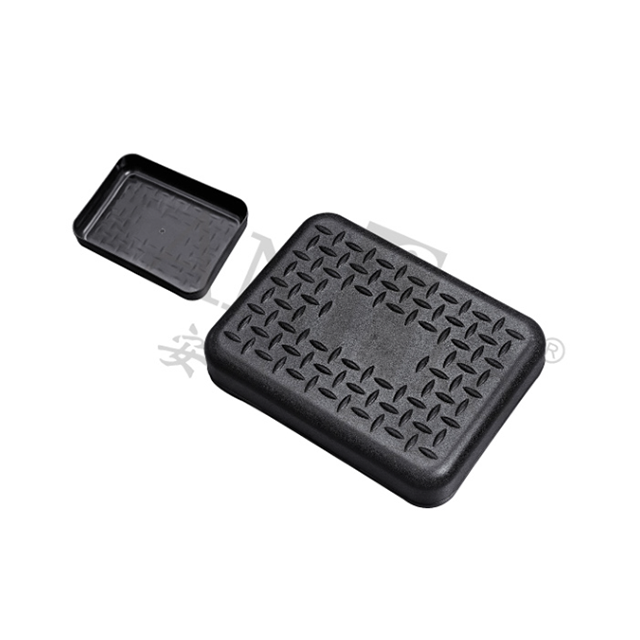
One of the most vital functional aspects of the design is the surface texture. A smooth base can be a liability, causing a bag to slide off a sloping surface, a moving luggage cart, or a boat deck. Therefore, engineering the anti-slip properties of a Bottom Pad is a top priority. Designers achieve this by incorporating specific tread patterns—such as diamond plate textures, ribbed lines, or stippled dots—into the mold.
The coefficient of friction is carefully calculated based on the intended use. For marine or outdoor gear, deep channels that allow water and mud to escape are integrated into the pad, ensuring the gripping surface makes direct contact with the ground. In industrial settings, where oil or chemical spills are a concern, the combination of an oil-resistant material like TPU with an aggressive, multi-directional tread pattern ensures that the heavy equipment case remains firmly planted exactly where the professional left it, preventing dangerous accidents and equipment damage.
The effectiveness of even the most well-designed base component is entirely dependent on how securely it is attached to the bag or case. The installation process must be robust enough to withstand the same sheer forces and impacts that the pad itself is designed to absorb. There are three primary methods of installation used in the industry: stitching, riveting, and adhesive bonding, often used in combination for maximum security.
Stitching: This is the most common method for soft-sided bags, backpacks, and duffles. The pad is designed with a perimeter sewing groove that guides the needle and protects the thread from abrasion. High-tensile bonded nylon or Kevlar threads are typically used to ensure the seam does not burst under heavy loads.
Riveting: For hard cases, heavy-duty tool bags, and large luggage, metal rivets provide a mechanical bond that is incredibly strong. Rivets are driven through the plastic pad, the bag material, and often an internal backing plate or washer. This sandwiches the bag fabric between two rigid components, virtually eliminating the risk of the pad tearing away from the bag.
Adhesive Bonding: In modern seamless designs, especially in waterproof dry bags and high-end outdoor gear, industrial-grade adhesives or high-frequency welding techniques are used. This creates a watertight seal between the pad and the bag, ensuring no moisture can penetrate through stitch holes.
Before a product reaches the consumer, rigorous quality control and testing protocols must be executed to validate the performance of the base components. Testing a Bottom Pad involves simulating years of abuse in a matter of days. Drop tests are conducted by fully loading the bag and dropping it from various heights onto concrete to ensure the pad does not crack and the attachment points hold secure.
Abrasion testing involves dragging the loaded bag across rough surfaces like asphalt or sandpaper for predetermined distances to measure the wear rate of the plastic or rubber. Furthermore, environmental chamber testing exposes the pads to extreme UV radiation, high humidity, freezing temperatures, and intense heat to ensure the materials do not degrade, fade, or become brittle over time. Only components that pass these stringent tests are deemed suitable for high-quality luggage and industrial applications.
In conclusion, the integration of a high-quality base protection system is a non-negotiable aspect of superior bag, luggage, and case design. Investing in premium foundational components yields numerous benefits that directly translate to enhanced product value, reduced warranty claims, and increased customer loyalty. The ultimate advantages of incorporating a meticulously engineered Bottom Pad include:
Exceptional Durability and Longevity: By acting as a sacrificial barrier, the pad prevents the primary fabric or shell of the bag from abrasive wear, significantly extending the usable life of the product.
Superior Structural Support: It provides a rigid or semi-rigid foundation that helps bags maintain their shape, distributes heavy loads evenly, and prevents sagging, making packing and transport much easier.
Enhanced Moisture and Dirt Protection: Elevating the bag off the ground ensures that the contents remain dry and clean, even when placed on wet, muddy, or oily surfaces, which is critical for both travel and industrial applications.
Advanced Impact Resistance: Engineered with shock-absorbing materials and geometries, the pad dissipates kinetic energy from drops and impacts, safeguarding delicate electronics, tools, and personal belongings.
Improved Safety and Stability: Customized anti-slip textures and high-friction materials ensure that bags and cases remain securely in place on sloping or slippery surfaces, preventing accidents in transit or on job sites.
Elevated Brand Aesthetics: Beyond functionality, modern base pads offer a canvas for custom branding, unique color matching, and sleek designs that enhance the premium look and feel of the final product.
Ultimately, the base of a bag is its foundation, and a strong foundation is the hallmark of exceptional craftsmanship. By prioritizing the design, material selection, and manufacturing quality of these essential components, brands can deliver unparalleled reliability and performance to their customers across all industries.


