
Views: 0 Author: Site Editor Publish Time: 2026-01-21 Origin: Site


Plastic buckles are a key component in a variety of outdoor gear and accessories, playing an essential role in providing secure, adjustable, and durable fastening solutions. Their strength, durability, and reliability are crucial factors that determine the performance of products like backpacks, hiking gear, baby carriers, and sports equipment. This performance review focuses on evaluating how well plastic buckles perform under stress, their ability to withstand harsh environmental conditions, and their overall long-term reliability. With materials such as Nylon, Polycarbonate, and Polypropylene, plastic buckles offer a perfect balance of lightweight design and robust performance, making them a reliable choice for a wide range of applications.
Plastic buckles are designed to withstand significant loads and stress without breaking or deforming. Their performance relies on the choice of material and design, ensuring they can handle pressure and remain durable over time.
Plastic buckles distribute stress evenly across the buckle and strap, preventing deformation under heavy loads. Their design allows for load distribution and resistance to deformation, ensuring reliable performance.
Load Distribution: Plastic buckles spread stress over a wider surface, reducing the risk of failure at weak points.
Deformation Resistance: Materials like Nylon, Polycarbonate, and Polypropylene are designed to maintain shape and integrity under stress, providing long-term durability.
The material of a plastic buckle directly impacts its strength. Here are the key materials used:
Nylon: Offers high tensile strength, making it ideal for heavy-duty applications like backpacks or safety harnesses. It’s resistant to wear and performs well across varying temperatures.
Polycarbonate: Known for impact resistance, Polycarbonate offers high rigidity and is suitable for applications requiring high load-bearing capacity and abrasion resistance, such as climbing harnesses.
Polypropylene: Polypropylene balances strength and flexibility, making it ideal for medium-duty applications like sports gear. It is moisture-resistant, making it perfect for marine environments.
When compared to metal buckles, plastic buckles offer several advantages:
Weight: Plastic buckles are lighter, reducing overall gear weight, which is crucial in backpacks, hiking, and sports gear. Metal buckles can add unnecessary weight.
Corrosion Resistance: Plastic buckles are resistant to rust and corrosion, unlike metal buckles that can degrade in moisture or saltwater.
Strength: While metal buckles excel in extreme heavy-duty use, high-quality plastic buckles made from Nylon or Polycarbonate provide comparable strength without the weight, making them suitable for a variety of applications.
Plastic buckles are designed to endure harsh conditions over time, ensuring long-term performance and reliability in outdoor gear, sports equipment, and safety accessories. Their durability is determined by how well they resist UV exposure, moisture, extreme temperatures, and abrasion.
UV rays can degrade plastic materials, causing brittleness and weakening. However, some plastics are built to handle this exposure.
Polycarbonate: Known for excellent UV resistance, Polycarbonate maintains strength and rigidity in outdoor gear like climbing harnesses and backpacks.
Polypropylene: Offers decent UV resistance but is less durable under long-term exposure compared to Polycarbonate.
Plastic buckles must resist moisture to prevent corrosion or swelling.
Polypropylene: Highly resistant to moisture and water absorption, making it ideal for marine gear and wet conditions.
Nylon: Performs well in moderate moisture but may absorb small amounts of water without compromising strength.
Plastic buckles should withstand both cold and heat without losing functionality.
Polypropylene: Resists extreme temperatures, maintaining flexibility in cold and hot environments.
Polycarbonate: Performs well in high temperatures without deforming, ideal for safety gear and performance equipment.
Nylon: Performs well in moderate temperatures but may lose strength under extreme heat.
Plastic buckles face abrasion from rough surfaces and constant use.
Polycarbonate: Highly abrasion-resistant, ideal for sports gear and climbing equipment.
Nylon: Resists abrasion but may wear down faster than Polycarbonate under heavy use.
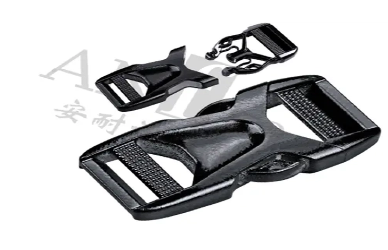
Plastic buckles are vital for ensuring the performance and reliability of outdoor gear, such as backpacks, safety equipment, and sports gear. They must withstand heavy use, weather exposure, and wear and tear while maintaining their functionality and strength over time. Testing methods help assess their long-term performance in real-world conditions.
Plastic buckles face significant stress in high-demand environments:
Repeated Adjustments: Buckles need to perform consistently under continuous strap adjustments without losing their locking mechanism.
Weather Exposure: Plastic buckles must resist UV radiation, moisture, and extreme temperatures. Polycarbonate and Polypropylene are excellent for these conditions due to their strength and UV resistance.
Heavy Loads: Buckles in hiking backpacks and safety harnesses must handle heavy loads without deforming. Materials like Nylon ensure tensile strength for load-bearing applications.
Plastic buckles must retain adjustability and strength after prolonged exposure:
Durability: High-quality materials resist degradation from UV, moisture, and temperature. For example, Polycarbonate and Polypropylene maintain strength in demanding environments like marine gear or climbing equipment.
Impact Resistance: Polycarbonate offers excellent impact resistance, crucial for gear that might experience accidental bumps or drops.
Corrosion Resistance: Unlike metal buckles, plastic buckles don’t corrode in moist environments, making them ideal for rain gear or marine applications.
To ensure reliability, plastic buckles undergo several tests:
Tensile Testing: Measures the maximum load the buckle can withstand before breaking.
Fatigue Testing: Assesses how well the buckle holds up under repeated use and stress cycles.
Environmental Testing: Simulates extreme temperatures, UV exposure, and moisture to evaluate how materials hold up in real-world conditions.
Impact Testing: Simulates accidental drops to test the buckle's durability under sudden stress.
Backpacks: Plastic buckles made from Nylon and Polypropylene maintain strength and adjustability even under heavy loads and constant use.
Safety Gear: Polycarbonate buckles provide reliable performance in high-stress applications, ensuring security in climbing harnesses and safety belts.
Plastic buckle performance is shaped by material choice, manufacturing methods, and design. These factors ensure the buckles can endure real-world stresses in applications like backpacks, safety gear, and outdoor equipment. Quality control and certifications (e.g., ISO standards) are also essential for reliable performance.
The material determines the buckle's strength, durability, and resistance to environmental factors.
Nylon: Offers high tensile strength for heavy-duty applications like hiking gear. It’s also abrasion-resistant and handles temperature changes well.
Polycarbonate: Known for impact resistance and UV stability, ideal for outdoor gear like climbing equipment.
Polypropylene: Moisture-resistant, suitable for marine applications and lighter-duty gear like backpacks.
Injection molding is the primary method for producing precise, durable buckles.
Injection Molding: Allows for rapid, cost-effective production of high-quality buckles with minimal material waste. The process enables consistent quality across large batches.
The design directly affects buckle functionality and strength.
Locking Mechanism: Determines security, crucial for safety gear.
Strap Fit: Ensures a tight fit to prevent slippage, essential for backpacks and sports gear.
Ease of Use: Designs like quick-release or adjustable buckles balance security and usability.
Quality control and certifications ensure buckles meet performance standards.
Quality Control: Continuous checks during production guarantee defect-free buckles and proper strength.
Certifications (e.g., ISO): ISO standards provide assurance that buckles meet performance and safety requirements.
Plastic buckles provide comparable strength for many applications, especially in medium-duty and light-duty uses. They are lighter and more corrosion-resistant than metal buckles, making them ideal for outdoor gear, sports equipment, and backpacks where weight and exposure to the elements are concerns.
Plastic buckles are made from high-performance materials like Polycarbonate and Polypropylene, which offer UV resistance, moisture protection, and abrasion resistance. These properties help buckles endure extreme conditions, such as exposure to sunlight, rain, and saltwater, while maintaining their functionality and strength over time.
Yes, plastic buckles made from high-strength materials like Nylon can handle heavy loads without compromising safety or performance. They are often used in applications such as hiking backpacks and safety harnesses, where load-bearing capacity is essential, offering a lighter alternative to metal buckles while still maintaining high strength.
Manufacturers use rigorous quality control, tensile testing, and fatigue testing to ensure that plastic buckles remain reliable throughout their lifespan. Compliance with certifications like ISO standards guarantees that buckles meet performance and safety criteria. These tests assess strength, durability, and functionality under real-world conditions, ensuring the buckles perform reliably in the field.
The strength, durability, and reliability of plastic buckles are determined by key factors such as material choice, manufacturing methods, and design. High-performance materials like Nylon, Polycarbonate, and Polypropylene ensure that buckles can handle heavy loads, environmental stressors, and repeated use. Advanced injection molding techniques allow for precise, durable buckles, while thoughtful design features—such as secure locking mechanisms and adjustable fittings—enhance their functionality. Rigorous quality control and adherence to ISO certifications further ensure that these buckles meet safety and performance standards. In outdoor gear, bags, safety equipment, and other applications, plastic buckles deliver exceptional reliability, offering a lightweight, corrosion-resistant, and cost-effective solution without compromising strength or longevity. Their ability to withstand harsh conditions makes them essential in everyday gear and high-demand environments alike.


